Dental Implant Surgery in Sterling, VA

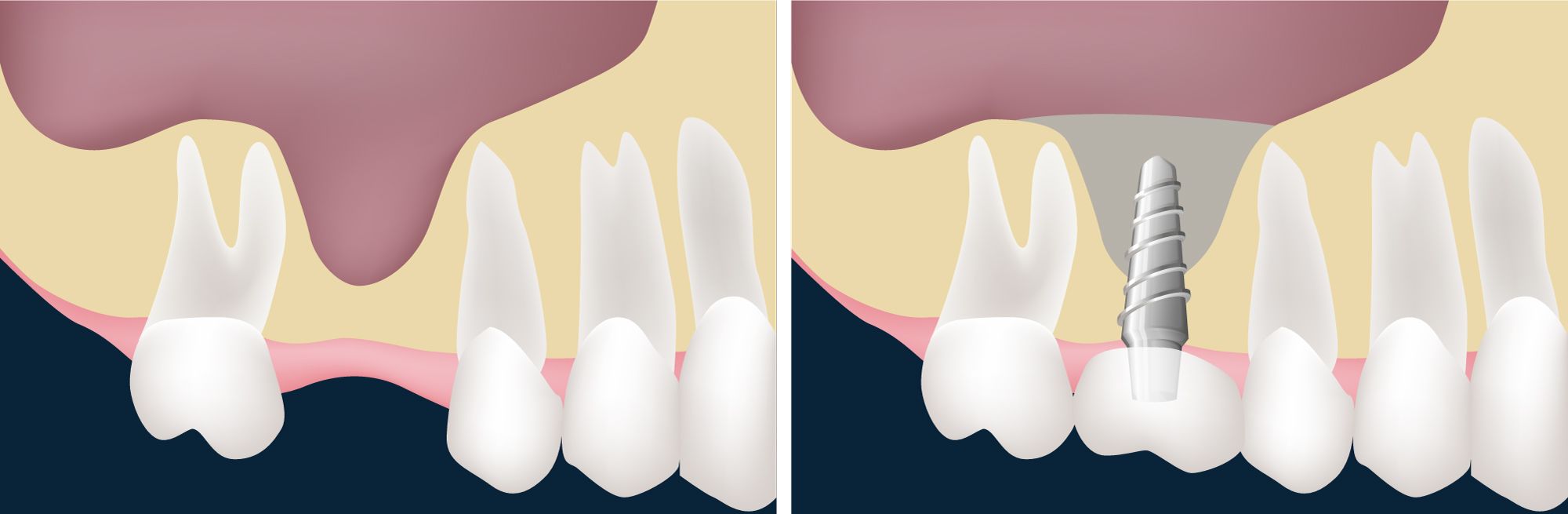
Dental implant surgery replaces a missing tooth root with an implant placed into the jawbone, creating a stable foundation for a crown, bridge, or implant-supported restoration.

But successful implant surgery involves much more than simply finding enough bone and placing an implant.

At Nova Implant Family Dentistry in Sterling, Dr. E. Richard Hughes plans implant treatment with the final restoration in mind from the beginning. He evaluates your bone, anatomy, bite, existing teeth, and the position of the replacement teeth before determining where and how the implants should be placed.

Dr. Hughes also performs both the surgical and restorative phases of implant treatment for patients who come directly to Nova, allowing the entire process to be planned with the finished result in mind.

“What kind of prosthesis do I want for the patient? That’s the first thing. Then I build the implants around it.”

Dr. Hughes' Perspective

How Dental Implant Surgery Is Planned

Before surgery, Dr. Hughes performs a comprehensive evaluation to determine whether dental implants are appropriate and how treatment should be approached.

This includes evaluating your teeth and gums, reviewing your medical history, discussing your goals, examining your bite, and assessing the bone where implants may be placed.

For Dr. Hughes, the planning process isn’t simply about answering:

“Where can an implant fit?”

It also needs to answer:

“Where does the final tooth need to be?”

The implant needs to support a restoration that looks appropriate, functions properly, and works within your overall bite.

That restorative goal helps determine the implant’s position, angle, depth, and relationship to surrounding structures.

3D CBCT Imaging for Implant Planning

Dr. Hughes uses cone beam computed tomography, or CBCT, to evaluate the jaw in three dimensions before implant surgery.

CBCT imaging allows him to assess:

  • Bone height and width
  • Bone quality
  • Jaw shape and angulation
  • Nerve location
  • Sinus anatomy
  • Surrounding teeth and structures
  • Potential implant positions

Dr. Hughes did not always consider 3D imaging essential to implant treatment. After incorporating CBCT into his practice, however, he came to value the additional anatomical information it provides and the ability to plan surgery before beginning the procedure.

The technology provides important information, but it does not replace clinical experience and surgical judgment.

Does Dr. Hughes Use Computer-Guided Implant Surgery?

Not routinely.

Computer-generated surgical guides can be useful in implant dentistry, but Dr. Hughes does not believe every implant case requires a fully guided approach.

With decades of implant surgery experience, he uses CBCT imaging together with clinical examination, surgical judgment, depth-control measures such as drill stops, and positioning aids when appropriate.

The technology used is selected according to the needs of the individual case rather than automatically applying the same surgical workflow to every patient.

Do You Need Treatment Before Implant Surgery?

Not everyone is ready for implant placement immediately.

Depending on your oral health and anatomy, Dr. Hughes may recommend treatment before or at the time of implant placement.

Possible procedures include:

  • Tooth extraction
  • Treatment of active gum disease or infection
  • Socket grafting
  • Bone grafting
  • Ridge expansion
  • Sinus augmentation

In some cases, these procedures require healing before an implant can be placed. In others, Dr. Hughes may be able to combine procedures.

For example, when conditions are appropriate, a failing tooth may sometimes be removed, the socket grafted, and the implant placed during the same appointment.

The treatment sequence depends on the condition of the tooth, surrounding bone, infection risk, implant stability, and the restoration being planned.

What Happens During Dental Implant Surgery?

Dental implant placement is generally performed as an outpatient procedure.

The exact surgery varies according to whether you’re receiving one implant, several implants, or a more extensive implant-supported restoration.

1. Anesthesia and Comfort

The treatment area is thoroughly numbed with local anesthetic before surgery begins. Additional comfort or sedation options may be considered when appropriate.

2. Accessing the Implant Site

Dr. Hughes accesses the underlying jawbone at the planned implant location.

If a failing tooth needs to be removed as part of the procedure, the extraction may occur during the same surgical appointment when appropriate.

3. Preparing the Implant Site

The implant site is carefully prepared according to the dimensions and position established during treatment planning.

Dr. Hughes considers the available bone as well as the final position of the planned crown, bridge, or other restoration.

4. Placing the Dental Implant

The implant is placed into the prepared site in the jawbone.

Its position and stability are evaluated before the surgical phase is completed.

5. Healing Abutment or Closure

Depending on the case, Dr. Hughes may place a healing abutment that extends through the gum tissue or allow the implant to heal beneath the gums.

The appropriate approach depends on the implant site and treatment plan.

6. Post-Operative Instructions

Before you leave, you’ll receive instructions for protecting the surgical site, managing the early healing period, maintaining appropriate oral hygiene, and knowing when to contact the office.

One-Stage vs. Two-Stage Dental Implant Surgery

dental implant Traditionally, implant treatment has often been performed using a two-stage approach.

During the first stage, the implant is placed and allowed to heal while the surrounding bone integrates with it. Once sufficient healing has occurred, a second minor procedure exposes the implant so an abutment can be connected.

Dr. Hughes still uses this approach frequently.

However, not every implant requires a second surgical procedure.

In selected cases, he may place a healing abutment during the original implant surgery so that it remains accessible above the gum tissue during healing.

The decision depends on the implant site, stability, anatomy, and overall treatment plan.

What Is Osseointegration?

After implant placement, the surrounding bone needs time to heal around and integrate with the implant.

This process is known as osseointegration.

Osseointegration creates the biological stability that allows an implant to support a replacement tooth or larger restoration.

Healing time varies according to the patient and procedure. Factors such as the implant location, bone quality, grafting, overall health, and type of restoration can all influence the treatment timeline.

During this period, Dr. Hughes monitors healing and determines when the implant is ready for the next stage of treatment.

Can a Tooth Be Placed on the Implant the Same Day?

Sometimes—but it’s important to distinguish immediate teeth from final teeth.

Certain implant cases can support a provisional tooth or restoration at or shortly after implant placement.

This is particularly relevant in some full-arch procedures, including appropriately selected All-on-4® cases.

However, receiving teeth immediately does not mean the implant has finished healing or that the restoration is necessarily the final one.

The implant still needs to integrate with the surrounding bone. When an implant is loaded during this period, the provisional restoration and the patient’s diet need to protect it from excessive forces.

Whether immediate provisionalization is appropriate depends on the individual case.

When Can an Implant Be Placed at the Same Time as an Extraction?

In appropriate situations, Dr. Hughes may remove a failing tooth and place an implant during the same appointment.

He may also graft the extraction socket at the time of implant placement to support the surrounding site.

Immediate implant placement can reduce the number of separate surgical procedures in selected cases, but it isn’t appropriate for every tooth.

Dr. Hughes evaluates the condition of the tooth, surrounding bone, location, infection history, implant stability, and final restorative needs before deciding whether immediate placement is appropriate.

What If You Don't Have Enough Bone for an Implant?

Insufficient bone doesn’t automatically mean you cannot receive dental implants.

It does mean the surgical plan may need to change.

Depending on the amount and location of remaining bone, Dr. Hughes may consider:

  • Bone grafting
  • Ridge expansion
  • Sinus augmentation
  • Different implant dimensions
  • Alternative implant positions
  • Other implant approaches in selected complex cases

One of Dr. Hughes’s guiding principles is to preserve healthy natural bone whenever possible.

That means bone grafting is an important option, but it isn’t automatically the only answer to every bone deficiency.

What Does Dental Implant Surgery Feel Like?

The surgical area is numbed during implant placement, so patients should not feel the surgical procedure itself in the same way they would without anesthesia.

Afterward, some pressure, tenderness, swelling, or discomfort can occur as the tissues heal.

After decades of performing implant surgery, Dr. Hughes has found that many patients are surprised by how manageable the recovery can be. In routine cases, he often finds implant placement less traumatic for patients than tooth extraction.

Individual experiences vary, particularly when treatment involves extractions, bone grafting, multiple implants, or full-arch surgery.

What Is Recovery Like After Dental Implant Surgery?

Recovery depends on the extent of your procedure and your individual healing response.

During the first several days, tenderness and swelling around the surgical site can be expected. The gums may remain sensitive while the tissue continues to heal.

Dr. Hughes provides individualized post-operative instructions, which may include:

  • Eating softer foods
  • Avoiding excessive pressure on the surgical site
  • Following appropriate oral hygiene instructions
  • Avoiding smoking
  • Taking medications as directed
  • Avoiding actions that could disturb the surgical area
  • Returning for scheduled follow-up visits

Many patients begin feeling considerably better as the initial healing period progresses, although the implant continues integrating with the bone long after the gums appear healed.

What Happens After the Implant Heals?

Once Dr. Hughes determines that the implant has healed sufficiently, treatment moves into the restorative phase.

Depending on your treatment, the implant may support:

  • A single dental crown
  • An implant-supported bridge
  • An implant-supported removable denture
  • A fixed full-arch restoration

An abutment connects the implant to the restoration.

The final restoration is designed according to the position of the implant, surrounding teeth and gums, appearance, function, and bite.

Before completing treatment, Dr. Hughes evaluates how the restoration contacts the opposing teeth and how forces are distributed when you bite and chew.

This is particularly important because long-term implant success depends on more than whether the implant integrates with the bone.

For Dr. Hughes, successful implant treatment has to “fit tight, look right, and bite right.”

Dr. Hughes' Perspective

Why Your Bite Matters After Implant Surgery

An implant can successfully integrate with the jawbone and still experience problems if the finished restoration is subjected to excessive or poorly distributed forces.

Dr. Hughes has evaluated and treated implant complications in which bite overload contributed to problems around the implant.

That’s one reason he incorporates the final restoration and occlusion—the way your teeth come together—into planning from the beginning.

The objective isn’t simply successful surgery.

It’s an implant and restoration that work together as part of your entire mouth.

One Dentist for Implant Placement and Restoration

When patients come directly to Nova Implant Family Dentistry for implant treatment, Dr. Hughes generally performs both the surgical placement and restorative phases of care.

That provides continuity from the original evaluation and 3D planning through implant surgery and the final crown, bridge, denture, or full-arch restoration.

It also means the dentist determining where the final tooth needs to be is directly involved in deciding where the implant should be placed.

Dr. Hughes has practiced dentistry in Sterling for more than three decades and is a Diplomate of the American Board of Oral Implantology/Implant Dentistry. His training and experience encompass both implant surgery and implant prosthodontics.

Frequently Asked Questions About Dental Implant Surgery

How long does dental implant surgery take?

The length of surgery depends on the number of implants being placed and whether other procedures, such as an extraction or bone graft, are performed at the same appointment. Dr. Hughes will review the anticipated procedure and timeline with you before treatment.

Are you awake during dental implant surgery?

Dental implant surgery is commonly performed using local anesthesia, which numbs the treatment area while you remain awake. Additional comfort or sedation options may be considered when appropriate.

Does dental implant surgery hurt?

The treatment area is numbed for surgery. Tenderness, swelling, pressure, or discomfort can occur afterward, but the amount varies according to the patient and extent of treatment.

How long does a dental implant take to heal?

The gums begin healing relatively quickly, but integration between the implant and jawbone takes longer. The total healing period varies according to the implant site, bone quality, grafting, health, and treatment being performed.

Will I be without a tooth while my implant heals?

Not necessarily. Depending on the location and treatment plan, a temporary tooth, denture, or other provisional restoration may be available during healing. In selected cases, a provisional restoration can be connected to implants immediately.

Can an implant be placed immediately after a tooth is removed?

Sometimes. Dr. Hughes may place an implant at the same appointment as an extraction when the condition of the site, surrounding bone, implant stability, and other factors make immediate placement appropriate.

Does everyone need bone grafting before implant surgery?

No. Bone grafting is recommended when it is needed to create or preserve appropriate support for treatment. Some patients have sufficient natural bone, while others may have additional surgical or implant options depending on their anatomy.

Do all dental implants require two surgeries?

No. Dr. Hughes frequently uses a traditional two-stage approach, but in selected cases a healing abutment can be placed during the initial surgery, eliminating the need for a separate uncovering procedure.

Does Dr. Hughes use computer-guided implant surgery?

Dr. Hughes uses CBCT imaging to plan implant treatment in three dimensions but does not routinely use fully computer-guided surgery for every case. He selects surgical tools and techniques according to the individual patient’s anatomy and treatment needs.

Who places my implant and who makes the tooth?

For patients who come directly to Nova Implant Family Dentistry for implant treatment, Dr. Hughes generally performs the implant surgery and restorative treatment himself. This allows the surgical and restorative phases to be planned together.

Plan Your Dental Implant Surgery With Dr. Hughes

Dental implant surgery should be planned around more than the implant itself.

Dr. Hughes considers your bone, anatomy, existing teeth, bite, health, and—most importantly—the tooth or restoration the implant will ultimately support.

With both surgical and restorative implant experience, he can manage treatment from the initial 3D evaluation and implant placement through the final restoration at Nova Implant Family Dentistry in Sterling, Virginia.

If you’re considering a dental implant, need an extraction and tooth replacement, or have been told you need bone grafting before implant treatment, schedule an evaluation with Dr. Hughes.

Call (703) 444-1152 or request a dental implant consultation online.