
Determining the Cost of Dental Implants
Dental implants are considered the gold standard in tooth replacement, and there is no other solution that offers the same restorative and cosmetic benefits. Treatment cost will vary from patient to patient and depend largely on the type and number of implants you require. Dr. E. Richard Hughes can properly explain all of the different factors that shape your dental implant cost at his Loudoun County practice in Sterling, VA. Although dental implants can be more expensive than other options, many patients feel that their benefits, such as improved bone health, are well worth the investment.
Invest in Your Confidence, Appearance, and Long-term Health
When you lose a tooth, more than just your appearance is affected. Your jawbone will begin to atrophy and your dental function will be compromised. Although other restorative dental procedures can improve your oral health to some degree, dental implants are the only treatment solution that can enhance the health and appearance of your smile, while also promoting jawbone strength. This unique trait is possible because the implants stimulate the bone, similar to the function of a dental root. Other benefits include the ability to speak and eat all your favorite foods with confidence, which is often difficult with restorations like traditional dentures.
Although dental implants can be more expensive than other restorative options, many patients feel that their benefits are well worth the investment.
Factors Determining the Cost of Dental Implants
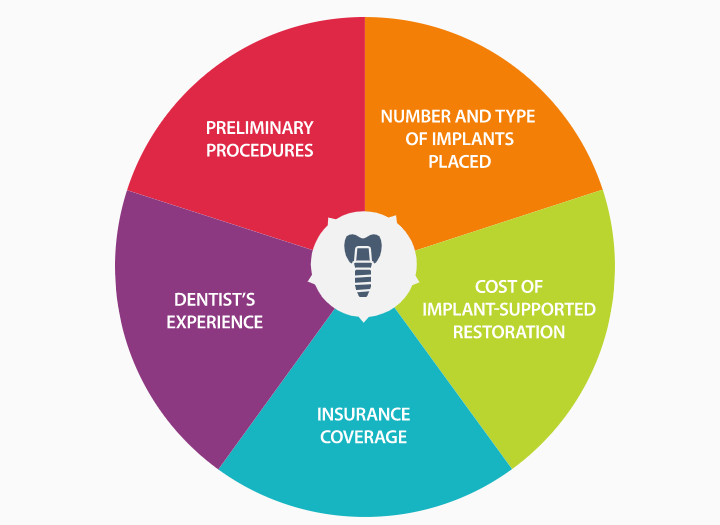
There are several factors that will determine the cost of dental implants. No two cases are the same, and we urge each patient to visit our office for a personalized estimate.
Number and Type of Dental Implants
In some cases, we might simply replace one tooth with an implant-supported crown, which will cost less than a treatment plan that incorporates the All-on-4® technique to support a denture. Mini implants are also typically less expensive than traditional implants.
Preparatory Procedures
Some patients will need to undergo treatment prior to implant placement in order to achieve the most beneficial and long-lasting results. If a patient’s jawbone is not dense enough to secure the implants in place, they can receive a bone graft to build up the jawbone. Bone grafts and other preparatory procedures will increase total treatment cost.
Implant-supported Restorations
Once your implant has been placed, Dr. Hughes will attach a custom restoration. The type and quantity of restorations used will have an impact on the cost of dental implants. Dental crowns, bridges, or dentures can be placed on the implant, and the treatment cost will be affected accordingly.
Insurance and Financing
Utilizing insurance and financing options is crucial for mitigating the financial burden associated with dental implants, making this transformative treatment more accessible to a broader range of individuals. Dental implants are often considered a significant investment due to their upfront costs, but insurance coverage can help alleviate some of these expenses. Many dental insurance plans offer coverage for implant procedures or related components, reducing the out-of-pocket costs for patients. Additionally, financing options allow individuals to spread the cost of dental implants over a manageable period, making the treatment more affordable on a monthly basis. This financial flexibility enables our patients to receive the benefits of dental implants without compromising their budget or delaying necessary dental care. In essence, combining insurance coverage and financing options is instrumental in making dental implants a feasible and cost-effective solution for individuals seeking to restore their oral health and confidence.
We understand that it can be difficult to determine insurance contributions to various dental treatments, and we can help you communicate with your insurance to gather this information. For out-of-pocket expenses, our office also accepts CareCredit® financing to break down the total cost of dental implants into monthly payments.
A Predictable, Secure Investment
The cost of dental implants is often considered a predictable and secure investment due to the long-term benefits they offer in terms of oral health, functionality, and aesthetics. Unlike traditional dental solutions such as bridges or dentures, dental implants are surgically placed into the jawbone, providing a stable and permanent foundation for replacement teeth. This stability not only enhances chewing efficiency but also prevents bone loss in the jaw, a common issue with other tooth replacement options. With proper care, dental implants can last a lifetime, making them a durable and cost-effective choice over the years. Moreover, the advancements in dental implant technology have led to increased success rates and reduced complications, further adding to the predictability and security of this investment in restoring a natural and confident smile. While the initial cost may seem higher compared to alternative options, the long-term benefits and improved quality of life make dental implants a worthwhile and reliable choice for many of our patients.
Your oral health comes before anything else, and we want to make certain that you receive the treatment you deserve for a healthy, radiant smile. Contact our office to learn more about the cost of your dental implant treatment.