All-on-4 vs. Traditional Full Arch Implants: Which Is Right for You?
If you’re missing most or all of your teeth — or you’re dealing with a full arch of failing, damaged, or hopeless teeth — two treatment paths are likely on your radar: All-on-4 dental implants and traditional full arch implants.
Both are life-changing. Both are permanent. Both dramatically outperform dentures in function, comfort, and long-term oral health. But they work differently, cost differently, and suit different patients.
This guide gives you the side-by-side comparison you need to understand what each approach involves — and which one makes more sense for your situation. Dr. E. Richard Hughes at Nova Implant Family Dentistry in Sterling, VA has placed both types of full-arch restorations and can walk you through the right choice at your consultation. But first, let’s get you informed.
Quick Comparison: All-on-4 vs. Traditional Full Arch Implants
| Factor | All-on-4 | Traditional Full Arch |
|---|---|---|
| Number of implants per arch | 4 | 6–8+ |
| Bone grafting usually required | No | Sometimes |
| Teeth provided same day | Yes (provisional) | Usually no |
| Upfront cost per arch | $20,000–$30,000 | $30,000–$50,000+ |
| Surgery complexity | Moderate | Higher |
| Recovery time | 3–6 months (full healing) | 6–12 months |
| Candidacy flexibility | Broader (works with less bone) | Requires adequate bone volume |
| Final prosthetic type | Fixed full arch bridge | Fixed individual crowns or bridge |
| Long-term success rate | 95%+ at 10 years | 95%+ at 10 years |
| Bone loss prevention | Yes | Yes |
| Feels like natural teeth | Yes | Yes |
Both options deliver excellent outcomes. The differences come down to bone availability, timeline preferences, budget, and the specific clinical picture of each patient.
What Is All-on-4?
All-on-4 is a full-arch implant technique developed to restore an entire upper or lower arch using just four strategically placed implants. The two front implants are placed vertically; the two rear implants are angled at up to 45 degrees. This angulation accomplishes two things: it distributes bite forces more evenly across the arch, and it avoids anatomical obstacles — like the sinus cavities in the upper jaw — that would otherwise require bone grafting before implants could be placed.
The result is a full arch of fixed teeth supported by four implants, often delivered as a provisional (temporary) restoration on the same day as surgery. Full healing and placement of the final prosthetic typically takes three to six months.
Who All-on-4 Is Designed For
All-on-4 was specifically engineered for patients who have experienced significant bone loss — the common consequence of long-term tooth loss or extended denture wear. Because the posterior implants are angled to engage denser, more anterior bone, many patients who would not qualify for traditional full-arch implants without bone grafting can proceed with All-on-4 treatment directly.
This makes All-on-4 the more accessible option for:
- Long-term denture wearers with measurable bone resorption
- Patients who want to avoid bone grafting procedures
- Patients seeking a faster overall treatment timeline
- Patients looking for the most cost-effective full-arch implant option
What Are Traditional Full Arch Implants?
Traditional full arch implant reconstruction — sometimes called a full arch fixed bridge or implant-supported full bridge — uses six to eight or more individual implants placed throughout the arch to support a full fixed restoration. Each implant is placed vertically, and all implants must be fully osseointegrated (fused to bone) before the final restoration is attached.
Because this approach relies on more implants distributed across the entire arch, it typically requires greater bone volume at multiple sites. Patients who have experienced significant bone loss in the posterior (back) regions may need bone grafting before traditional full arch implants can be placed — adding time and cost to treatment.
The final restoration in traditional full arch cases is often individual crowns or a segmented bridge, which can feel slightly more natural to some patients because each “tooth” is individually supported.
Who Traditional Full Arch Implants Are Designed For
- Patients with good to excellent bone volume throughout the arch
- Patients who prefer individual crown restorations over a single arch bridge
- Patients who are not time-sensitive and prefer a more staged treatment approach
- Cases where maximum implant distribution and load-sharing is clinically preferred
Side-by-Side: The Key Differences in Detail
Number of Implants
All-on-4: Four implants per arch, positioned strategically to maximize support with minimal bone requirements.
Traditional full arch: Six to eight or more implants per arch, placed at intervals throughout the jaw.
More implants does not automatically mean better outcomes. All-on-4’s engineering accounts for the reduced implant count through angulation and load distribution. Long-term success rates between the two approaches are comparable when patients are properly selected and treatment is performed by an experienced provider.
Bone Grafting
This is often the deciding factor for patients who have been wearing dentures for years.
All-on-4: Typically avoids the need for bone grafting. The angled posterior implants bypass bone-deficient areas and engage denser bone further forward in the arch. This is one of All-on-4’s most significant clinical advantages.
Traditional full arch: May require bone grafting — particularly in the posterior upper jaw, where the sinus cavities often encroach on available bone after tooth loss. Sinus lift procedures add $1,500–$3,000 per side and several months to the treatment timeline.
For patients who have already experienced bone loss, All-on-4 can save $3,000–$6,000 in grafting costs and shave four to six months off the overall timeline.
Same-Day Teeth
All-on-4: One of its signature advantages. Most patients leave surgery with a full provisional arch of fixed teeth attached to their implants the same day. These are not removable — they’re fixed in place and function reasonably well during the healing period.
Traditional full arch: Because implants are typically placed in stages and require complete osseointegration before loading, same-day teeth are less common in traditional protocols. Patients often wear a temporary removable appliance during the healing period.
For patients who have been wearing dentures or dealing with failing teeth, same-day fixed provisionals represent a meaningful quality-of-life improvement from day one.
Timeline
All-on-4: Surgery to final restoration typically takes three to six months. The majority of that time is osseointegration — the biological process of bone fusing to the implant surface. The surgical day itself is a single appointment.
Traditional full arch: The timeline is longer — often six to twelve months — particularly when bone grafting is required. Grafting must heal before implant placement, which then must heal before loading with a final restoration.
For patients who want to minimize time spent in transition, All-on-4 has a clear advantage.
Cost
All-on-4: Typically $20,000–$30,000 per arch. The reduced implant count, elimination of grafting in most cases, and streamlined same-day protocol contribute to lower overall cost relative to traditional full arch treatment.
Traditional full arch: Typically $30,000–$50,000+ per arch, depending on number of implants, grafting requirements, and the type of final restoration chosen.
Both options are significant investments. Both are available with financing through Nova Implant Family Dentistry. And both deliver a return — in function, health, and quality of life — that patients consistently describe as exceeding their expectations.
The Final Prosthetic
All-on-4: The final restoration is a full-arch fixed bridge — typically zirconia or acrylic on a titanium framework. The entire arch is one connected piece, supported by four implants. It does not come out. It functions like teeth. It looks like teeth.
Traditional full arch: The final restoration may be individual porcelain crowns on each implant, or a segmented bridge in two or three sections. Some patients find this feels slightly more “tooth-like” because each unit is individually supported. The clinical and functional difference is modest for most patients.
Success Rates
Both approaches have strong and comparable long-term track records.
All-on-4 has been documented in clinical literature since the early 2000s, with studies reporting implant survival rates of 94–98% at 10 years. Traditional full arch implants have an even longer evidence base with similarly strong survival rates.
The more important predictor of outcomes than technique is provider experience. Full-arch implant procedures — regardless of approach — are complex surgical cases that require extensive training, precise planning, and experienced execution. Dr. Hughes’ credentials as a Diplomate of the American Board of Oral Implantology reflect exactly this level of expertise.
All-on-4 vs. Traditional Full Arch: Decision Framework
Use this framework to think through which approach may fit your situation best. A formal consultation with Dr. Hughes, including 3D imaging, is necessary to determine the right clinical path — but this gives you a starting point.
All-on-4 Is Likely the Better Fit If:
- You have been wearing dentures for a year or more
- You have been told you don’t have enough bone for regular implants
- You want to avoid bone grafting if possible
- You want the fastest path to fixed teeth
- Budget is a consideration and you want the most cost-effective full-arch solution
- You want a single surgical appointment rather than a staged process
Traditional Full Arch Is Likely the Better Fit If:
- You have good bone volume throughout your arch (often the case in patients who lost teeth recently)
- You prefer individual crown restorations over a single arch bridge
- You are not time-sensitive and prefer a staged, thorough process
- Your dentist or specialist has identified clinical reasons to distribute more implants across your arch
When Either Approach Works:
- You are in good overall health with controlled systemic conditions
- You are a non-smoker or willing to quit for the treatment period
- You have realistic expectations about the healing process
- You are committed to proper maintenance after treatment
Why Full-Arch Patients Choose Dr. Hughes
Full-arch implant reconstruction is among the most technically demanding procedures in modern dentistry. Not every dentist who places implants is equipped to execute a complete full-arch case — and the difference in outcomes between experienced specialists and generalists is significant.
Dr. E. Richard Hughes is a Diplomate of the American Board of Oral Implantology, one of fewer than 500 dentists in the country to hold this credential. He has placed hundreds of full-arch restorations over a 30+ year career and has served as an expert witness for the FDA on implant-related matters. Patients from throughout Loudoun County, Reston, Ashburn, McLean, and the broader Northern Virginia region come to Nova Implant Family Dentistry specifically for complex implant cases.
The practice uses cone beam 3D imaging for every full-arch evaluation — a critical tool that maps bone volume, density, nerve location, and sinus anatomy before a single implant is placed. This level of diagnostic precision is what enables same-day treatment planning and reduces surprises during surgery.
Nova Implant Family Dentistry also accepts Medicaid — rare for a practice specializing in implant surgery — and offers financing through CareCredit and Lending Club Patient Solutions to make full-arch treatment accessible for patients at a range of financial starting points.
Frequently Asked Questions
Is All-on-4 as strong as traditional implants? Yes, for the vast majority of patients. All-on-4’s angled implant design is engineered to distribute bite forces across the arch effectively with four implants. Clinical studies show comparable long-term success rates to traditional full-arch approaches when patients are properly selected.
What if I need bone grafting — can I still get All-on-4? In most cases, All-on-4 is specifically designed to avoid bone grafting by using angled implants to engage available bone. Some patients with very significant bone loss may still require minor grafting, but the need is far less common with All-on-4 than with traditional full-arch protocols.
Can I eat normally after All-on-4? During the healing period (three to six months), patients follow a soft food diet to protect the provisional restoration and allow osseointegration. After the final restoration is placed, most patients can eat a normal, varied diet including most foods they enjoyed with natural teeth.
How do I clean All-on-4 implants? The fixed arch is cleaned like natural teeth — twice-daily brushing with a soft-bristle brush and daily use of a water flosser or interdental brush to clean under the bridge. Routine professional cleanings are also essential. The practice will provide detailed home care instructions after your procedure.
What happens if one of the four implants fails? Implant failure in well-executed All-on-4 cases is uncommon but possible. If a single implant fails, the prosthetic can often be supported on the remaining implants while the failed site is addressed. In some cases an additional implant is placed. This is one reason why choosing an experienced provider matters — complications are handled more effectively by specialists with deep case experience.
Does Nova Implant Family Dentistry accept insurance or Medicaid for full-arch implants? The practice accepts Medicaid, which is uncommon among implant specialists. Coverage for full-arch procedures varies by plan and clinical circumstances. The team can help you understand what your specific coverage may apply to and structure financing for the remaining balance.
What’s the first step? A consultation with 3D imaging. This allows Dr. Hughes to evaluate your bone structure, discuss your goals, and give you a clear recommendation — All-on-4, traditional full arch, or another approach entirely — along with a detailed cost breakdown and financing options.
Take the Next Step: Schedule Your Full-Arch Consultation
If you’re ready to explore a permanent solution to full-arch tooth loss, the right next step is a consultation with Dr. Hughes. You’ll receive a thorough evaluation, cone beam 3D imaging, and an honest recommendation — All-on-4, traditional full arch, or an alternative approach — with a complete cost and financing breakdown.
No pressure. No obligation. Just a clear picture of your options from one of Northern Virginia’s most experienced implant specialists.
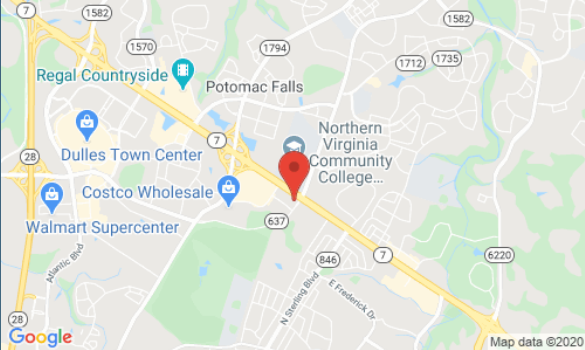
Nova Implant Family Dentistry 46440 Benedict Dr, Suite 201 Sterling, VA 20164 (703) 444-1152 novaimplantfamilydentistry.com